Nnedi Okorafor: "Fantasy, Magic & Suspense"
About the Author
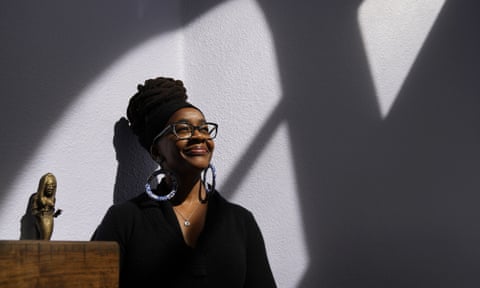 |
| Nnedi Okorafor for The Guardian (3) |
Nnedi Okorafor has won many awards for her work, such as two Hugo Awards for her works Binti and LaGuardia, and an NAACP (National Association for the Advancement of Colored People) for Death of the Author, which is featured below. According to her own blog, Nnedi has defined her own work as africanfuturism (which is supposed to be uncapitalized, according to her personally), and defines africanfuturism as, "africanfuturism is concerned with visions of the future, is interested in technology, leaves the Earth, skews optimistic, is centered on and predominantly written by people of African descent (black people) and it is rooted first and foremost in Africa" (5).
Author's Work Who Fears Death
 |
| Cover of Who Fears Death (4) |
Who Fears Death is praised by the National Public Radio as, "a great blend of fantasy, magic and suspense" (2). The review highlights that while the book is a work of fiction, it is based in the tragic reality of intertribal violence in Africa, and was inspired by the war between the Congo and Sudan.
Author's Work Death of the Author
 |
| Cover of Death of the Author (4) |
Death of the Author is praised by The Guardian for its imperfect, realistic protagonist and handling of topics such as feminism. "Ultimately, there is much to love here: the spiky feminism; the warm but also critical treatment of Nigerian culture; the thorny, eccentric, lovable main character" (3).
Personal Thoughts & Connections
I was first drawn to research Nnedi Okorafor because I first read her biography, then researched her work. Her story of finding her connection with writing and using the culture she grew up with and admired to fuel her creativity is very inspiring and relatable to me. As a hobby writer myself, and someone often referred a "natural storyteller," I deeply connect with using writing as a way to express your own thoughts or feelings on real world things, even if your writings don't always reflect exactly what's going on in the real world and/or are completely fictional.
Sources:
1. “Nnedi Okorafor.” Cleveland Public Library, 12 Nov. 2025, cpl.org/ohio-author/nnedi-okorafor/.
4. Okorafor, Nnedi. “Books.” Nnedi Okorafor, nnedi.com/books/. Accessed 24 Sept. 2026.
5. Okorafor, Nnedi. “Africanfuturism Defined.” Nnedi’s Wahala Zone Blog, 19 Oct. 2019, nnedi.blogspot.com/2019/10/africanfuturism-defined.html.


Nnedi Okorafor sounds like such a resilient author who reflects her own experiences throughout much of her writing. I find that writing style, even when woven into more fictional and fantastical stories, to be some of the best writing since it feels, at its core, so grounded. I love that the concept of africanfuturism suggests that even as the world evolves and develops to bigger and better things, culture does not have to be erased in the process if people fight for it to stay.
ReplyDeleteThe authors and books you chose seem really interesting, and I thought your blog was put together well. Fantasy is one of my favorite genres, so the books you highlighted seem like ones I would really enjoy reading. I also like how you pointed out that she’s a natural storyteller because I think that has a lot to do with whether a fantasy novel reads well.
ReplyDelete